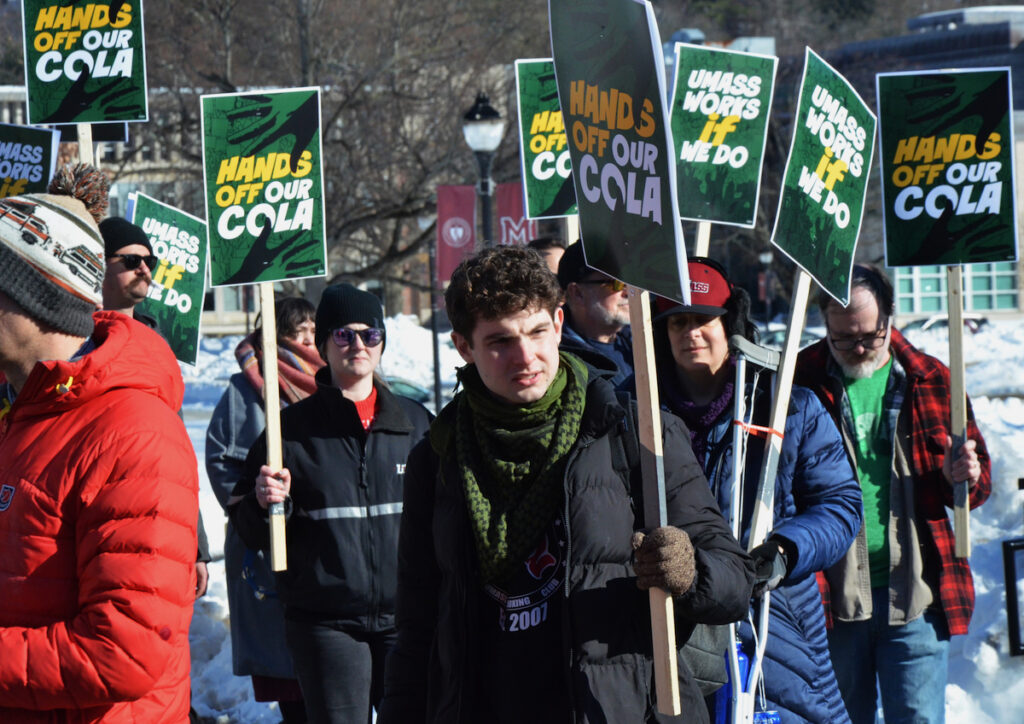
As you all know, our major hold-out point in the most recent contract negotiations was merit pay. After more than 500 days of bargaining, we successfully kept merit raises out of our collective future. Now that the dust is settling, those of us on the Solidarity Caucus want to take a second to think about what this means for our union, other campus unions, and class politics at our institution more broadly.
When PSU members gathered a number of times over the last two years to discuss the pros and cons of management’s merit proposal, several points came up repeatedly:
- Everyone deserves COLA (“cost of living adjustments” mandated to state employees by the governor—not a raise) which are designed to account for inflation; if you don’t get your full COLA, your pay is essentially going down year over year. As it stands, cost of living adjustments typically fail to even achieve what they’re designed to do: keep our pay stagnant in light of inflation rates.
- Performance reviews are already deeply plagued with documented bias from managers. Merit will only make this worse.
- PSU members in supervisory roles revealed that they were widely instructed by management never to give 5/5 on anyone’s performance review, regardless of how that employee performed, revealing that the PMP system is vulnerable to HR-rigging.
- Other campus unions that said yes to merit and went on to try to bargain safeguards around it are having their contracts walked all over by higher ups (ask any MSP member you know about the grievances they’ve pursued on this topic).
- Shouldn’t it be illegal for Chancellor Reyes to take the COLA money the state owes us and choose who gets more or less of it?
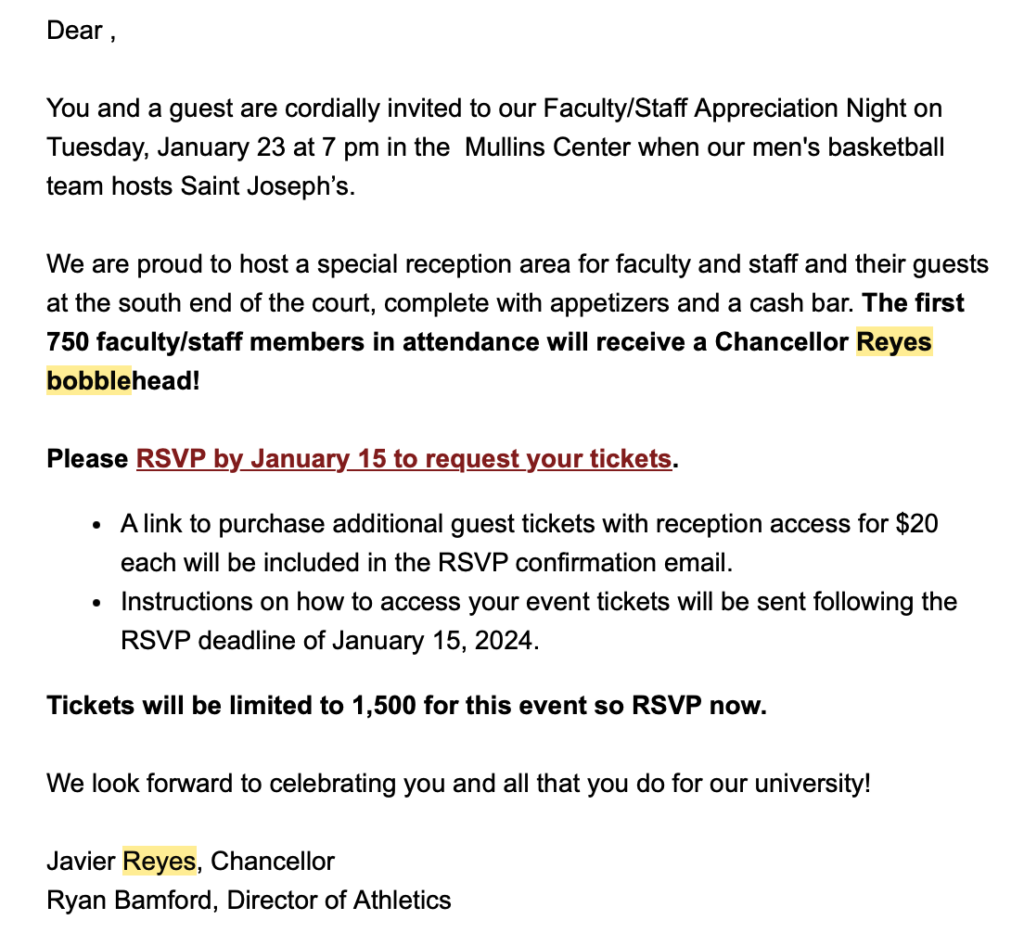
Another reason why PSU members held strong against the merit proposal was that it appeared to be coming directly from Chancellor Reyes himself (evidenced by management’s willingness to proceed without merit for the Boston chapter and some telling remarks Reyes himself made to staff at events). Reyes is a man with a long reputation of union-busting, a man who has spent hundreds of thousands of state monies siccing state police on student protestors, and a man who loves to distribute bobble-head figures of himself at sports games. Reyes’ reputation and relationship regarding students, unions, and spending make saying no to anything he’s touting a bit easier. As the old union adage goes, “the best organizer is a bad boss.”
So, we kept merit out of our contract. What does this mean moving forward?
Saying no to merit shows that PSU members believe in class solidarity—we, who aren’t millionaires yet who do the kinds of work that produces wealth for others, stuck together. We aren’t committed to climbing the campus ladder in a desperate play for better pay when it comes at the expense of others. Rather, as a whole, we’re committed to making sure that everyone who works here is paid the living wage that they deserve. More workers with better wages translates into longer staff tenures, less turnover, more job satisfaction, and better mental health, all of which enhances the overall campus climate and ability to function. Accepting merit is a cynical, self-serving move that puts personal gain over the long-term flourishing of the university and the supposed common good it serves.
Perhaps most importantly, saying no to merit meant that PSU’s better-paid members were willing to stand up for the dignity and respect of our more poorly paid members. It also meant that more of PSU’s members’ eyes are wide open to the kinds of bias operating all around us.
PSU members make drastically different wages and do all kinds of unique work across our bargaining unit, but we still understand ourselves fundamentally together as workers. We do the daily grind type of work that isn’t always sexy or featured in the university magazine: advising, counseling, filing paperwork, scheduling courses, communicating with students, and ensuring that the systems running this campus function smoothly and effectively.
By rejecting merit, we’ve rejected an element of the administrative class’s mode of thinking. The managerial class (nationally, not just here) seeks to capture and control as many resources in higher education as possible, handing out raises and promotions only to those who demonstrate ideological compliance and support for their program of seizure and exploitation. This is the same managerial class that inflates their own salaries, siphons resources from and shrink departments, forces brutal reorganizations, protects bully bosses, seeks funding partnerships with war profiteers, and sows division among workers.
The managerial class which Reyes and team belong to aren’t dreaming of a livable future for our students. But PSU is here because we believe in the transformative powers of public higher education and organized labor to create just opportunities for our students and ourselves. As we look towards the next contract fight—and the grueling contract enforcement battles sure to come in the interim—let’s remember our solidarity and expand the bravery it took to say no to merit, no to personal greed, and yes to community and future dreaming. Who knows, maybe more campus unions will follow our example and say no to merit next time!
If you have any questions or want to talk in detail about any of the things we’re referencing, please reach out directly to psusolidarity@gmail.com.
PSU Solidarity Caucus
Koby Leff
Santiago Vidales, PhD
Monica Garcia
Sierra D. Dickey
Hannah Bernhard
Anita Gallers, PhD
Amelia Sutton
Aline Gubrium, PhD (MSP)